Dedicated work number or call forwarding?
Choose between a dedicated work number and call forwarding by comparing control, testing, rollback, and what happens when routing fails.
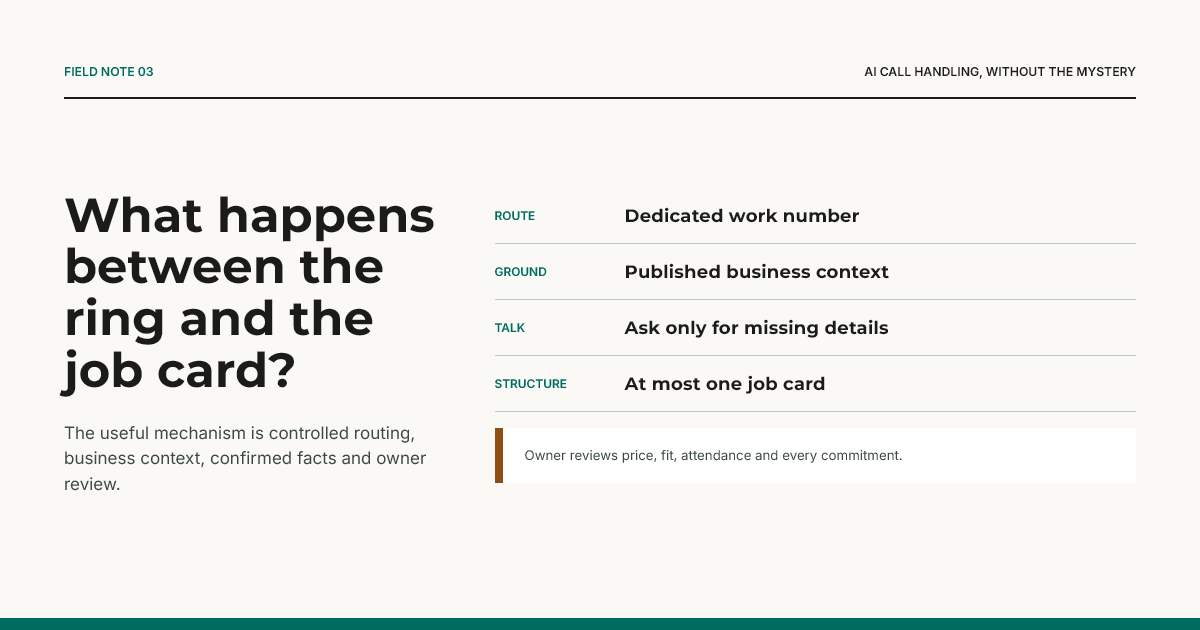
A dedicated work number gives the cleanest separation and easiest test path. Call forwarding can preserve an existing advertised number, but it depends on carrier controls and needs a rehearsed rollback.
Dedicated number: clear boundary
Customers call a number assigned to the service. You can test it before publishing it, keep personal calls separate, and stop using it without changing an existing mobile configuration.
The trade-off is adoption. The number must appear wherever customers find the business, and existing contacts may keep calling the old one.
Forwarding: continuity with dependencies
Conditional forwarding can route calls when the owner does not answer or is unavailable. Exact options, delays, menus, and cancellation steps vary by carrier and account. Do not copy an unverified forwarding code from a generic article.
An app cannot silently intercept ordinary mobile calls. Existing-number handling requires explicit telephony routing or another supported connection.
Decide by test and rollback
For either route, write down:
- which calls should reach the service;
- how long the owner's phone rings first;
- what the caller hears during provider failure;
- where the resulting record appears;
- who can turn routing off;
- how an external test phone confirms rollback.
Test during working hours and outside them. Include unanswered, declined, busy, and unavailable states where your provider supports them.
Current Max & Mia scope
Max & Mia provides an assigned number. Customers can use it directly, while the owner controls whether selected or all calls from an existing carrier number are forwarded to it. That routing choice should be part of setup, not hidden behind an AI feature description.
Use the AI receptionist test guide after choosing a route. Confirm exact carrier instructions with your provider before changing a live number.