What makes call handling useful for electricians?
Record observed electrical symptoms, location, timing, access, and safety concerns while leaving diagnosis and attendance decisions with the electrician.
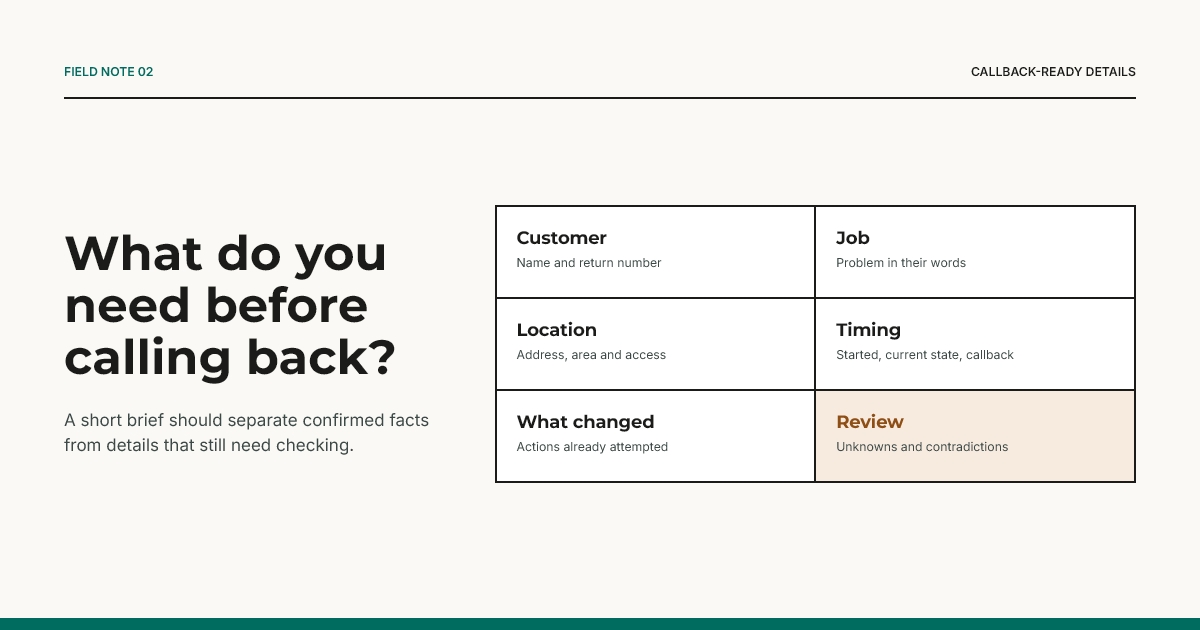
Useful call handling for an electrician records what the caller observed without converting it into a technical conclusion. The electrician needs the symptom, location, timing, access, and any stated safety concern before deciding the next action.
Use the caller's observations
Capture “lights flicker in the kitchen”, “socket feels warm”, or “power is off upstairs”. Do not rewrite those statements as a diagnosed circuit fault. The distinction matters when the owner decides whether the work fits and what questions to ask next.
Find the affected area
Record the address and where in the property the issue appears. Ask whether the caller knows what changed before the problem started, but do not force an answer. Recent work or an appliance change may be useful context without proving a cause.
Keep safety handling bounded
The business should define approved escalation wording and restricted advice. A general call-handling article cannot determine the correct response for every electrical condition. Preserve the caller's concern and route the decision to a qualified person or the business's approved emergency process.
Avoid accidental bookings
Customer availability is useful. It is not a confirmed visit. Keep requested timing separate from owner-approved attendance, and never present a callback window as an arrival guarantee.
Max & Mia's target flow asks for missing details and creates at most one structured job card for owner review. Diagnosis, quotes, payments, autonomous booking, and guaranteed commitments remain outside its MVP.
Define the fields you want to scan between jobs with the Callback-Ready Job Card Builder. Test uncertain and safety-sensitive calls before routing customer traffic.